
A survey The Madison Group conducted in 2024 indicated that 87% of respondents have or plan to incorporate sustainable materials in their products. The highest priority sustainable materials are those that incorporate post-consumer resin (PCR), while the biggest obstacle is that their performance is too variable. This article will review the challenges associated with incorporating PCR, specifically mechanically recycled resins into parts and discuss potential approaches to address these challenges.

Our clients highest priorities and biggest obstacles concerning incorporating sustainable materials.
Understanding PCR Integration
There are two main techniques to incorporating PCR into materials: chemical and mechanical recycling.
- Chemical Recycling: This involves breaking down plastic waste using various processes like depolymerization to create new, high-purity resins. However, chemical recycling faces its own challenges – it’s often more expensive, offers limited material types, and the environmental benefits compared to virgin plastic production are still being debated.
- Mechanical Recycling: This more established method involves sorting, cleaning, and grinding plastic waste into flakes or pellets that can be compounded into new resins. While cost-effective, mechanically recycled PCR can suffer from inconsistent quality, reduced performance compared to virgin material, and processing variations.
This article will focus on three key challenges associated with mechanically recycled PCR that can be addressed to improve its usability.
Performance Considerations with Mechanically Recycled Resins
Compared to virgin resins, mechanically recycled resins often exhibit different properties. This is because PCR typically has a lower molecular weight. In plastics, lower molecular weight translates to a decrease in key mechanical properties like strength and toughness.

Table 1. An overview of ABS material properties demonstrating the influence of post-consumer resin.
These resins will also have more variability in their mechanical performance from lot to lot. This is because there is more variability in the performance of the source material, due to the variation in the commercially available grades of material.

Table 2. An overview of variability in the properties of different virgin polymer materials.
Additionally, the performance of mechanically recycled resins can vary from batch to batch. This variability stems from the inherent inconsistencies in the source material itself. Commercially available PCR can come from a wide range of plastic grades, each with its own performance characteristics.
Challenges of Processing Variability
Processing variability is a challenge with using mechanically recycled resins that is experienced at the manufacturing facility. This stems from several factors:
- Molecular Weight Variations: PCR often has a more variable molecular weight compared to virgin resin. This translates to variations in viscosity, a key factor impacting processing. The graphs shown in Figure 1 illustrate how molecular weight and molecular weight distribution of a polymer can affect viscosity versus shear rate behavior.
- Contamination: PCR can contain residual compounding ingredients (e.g. plasticizers, fillers, lubricants, etc.) or unintentional contamination from the original product. These can alter viscosity behavior, as shown in Figure 2, and potentially affect final mechanical properties. For instance, contaminants melting at a different temperature than the base resin can cause issues like filling difficulties or increased scrap due to degraded material.
- Pellet Size and Shape: When virgin resin and PCR are simply blended together without repelletization, the size and shape differences between them can impact processing. Variations in surface area and overall form can affect melting behavior and lead to inconsistencies in the polymer melt.
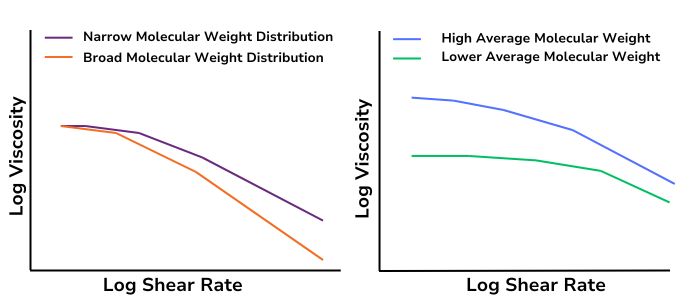
Figure 1. Graphs demonstrating the effect molecular weight and molecular weight distribution can have on polymer viscosity.
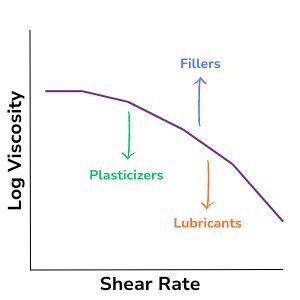
Figure 2. A graph demonstrating the effects of contamination on polymer viscosity.
Inconsistent Quality: Beyond Variability
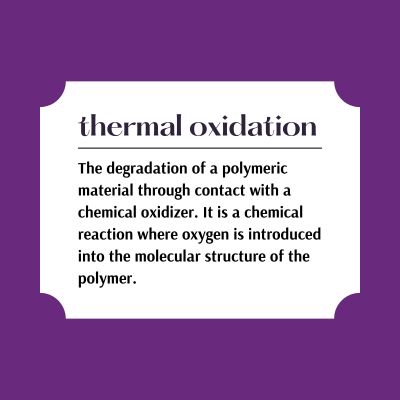
In addition to the previously discussed challenges of lot-to-lot variability and contamination, mechanically recycled resins can also suffer from inconsistent quality due to their thermal stability. All polymers degrade over time when exposed to heat, both during processing and in their final application. This thermal oxidation is even more pronounced with PCR because it has already undergone multiple heat histories throughout its life. The effects of thermal oxidation on PCR include:
- Reduced Molecular Weight:
- Increased Brittleness
- Lower Mechanical Performance (strength, ductility, toughness)
- Crack Formation
- Appearance Changes:
- Discoloration
- Loss of Gloss
- Reduced Transparency
- Volatile Emission:
- Potential Odor Generation
These factors contribute to the overall inconsistency in the quality of mechanically recycled resins.
Mitigating the Impact of Challenges
While mechanically recycled resins present challenges, there are strategies to minimize their impact. Some of these strategies include the following:
- Mechanical Performance: Establish the expected performance range by requesting property data from multiple lots (e.g., 9 lots over a year) and incorporate sufficient safety factors into your design. Specifying key property requirements and requesting certified material lots helps to ensure consistent performance.
- Processing Variability: Characterize the viscosity-shear rate behavior of several mechanically recycled resins lots to predict injection molding behavior and define a suitable processing window. If variability is high, consider lot-specific characterization and tailored processing conditions.
- Pellet Size and Shape: Eliminate processing issues by using compounded (blended and repelletized) PCR with the base resin.
- Contamination: Evaluate potential suppliers for robust composition control and minimal PCR contamination. Analyzing multiple mechanically recycled resins lots helps to determine if your process can tolerate potential contamination levels.
- Thermal Stability: Incorporate additional antioxidants during compounding to mitigate thermal oxidation and protect the resin’s properties.
By implementing these strategies, manufacturers can reduce the risks associated with using mechanically recycled resins.
